



The Universe: Space Exploration Discussion Thread General Chat 

Thread Insights Discussion AI
Exploring the cosmos reveals astonishing discoveries.
7/10 Informational

The post presents an interesting fact about galaxies and provides a relatable analogy, enhancing community engagement. However, it could benefit from deeper insights or questions to stimulate discussion.

James Webb Telescope NASA discoveries galaxies habitable planets solar system

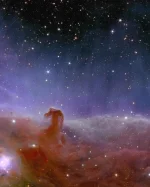
The thread begins with a focus on the vastness of the universe, featuring Hubble's images showcasing dense galaxies and discussions about the immense number of habitable planets within the Milky Way and beyond. Contributions highlight the cutting-edge findings from the James Webb Space Telescope, illustrating incredible structures like the Pillars of Creation.12

As the conversation progresses, a variety of significant discoveries emerge, including newly identified ancient galaxies, and the announcement of astronaut missions to the Moon, showcasing the active role of agencies like NASA and SpaceX in space exploration. Users express excitement over recent advancements in technology serving to unveil cosmic mysteries.34

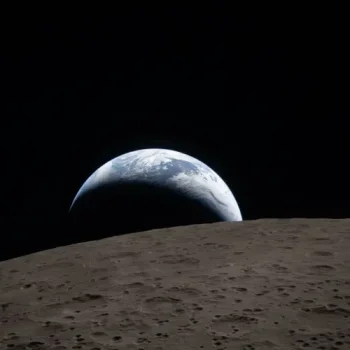
In the later discussions, users reflect on the mesmerizing visuals captured by space missions, leading to a deeper appreciation for both our planet and the greater universe. The thread encapsulates the thrill of discovery in space exploration and points towards the potential for life indicators found on distant exoplanets.56

"James Webb Space Telescope may have detected life indicators on distant planet K2-18b."

Verdict

While the thread successfully showcases remarkable achievements and information in space exploration, it leaves open the curiosity about life beyond our planet. The excitement and anticipation among users illustrate a growing interest in future discoveries.

Similar threads
Spikey Enthusiast
James Webb Space Telescope may have detected life indicators on distant planet K2-18b.

The specific indicator, dimethyl sulphide (DMS), is exclusively produced by life on Earth. Along with DMS, methane and CO2 were found in the planet's atmosphere, suggesting a potential water ocean presence.

Researchers emphasize that the detection is not yet confirmed. The planet, located 120 light years away, continues to be a subject of study, with more data anticipated in the coming year.

 
G Contributor
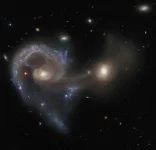
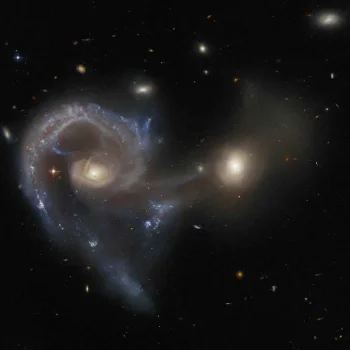
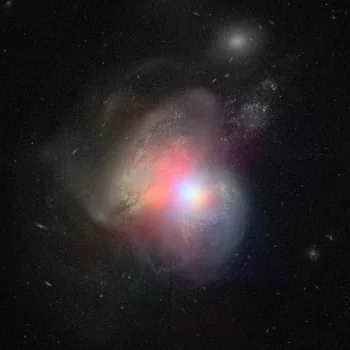
A pair of merging galaxies. The galaxy on the left has a large, single spiral arm curving out from the core and around to below it, with very visible glowing dust and gas. The right galaxy has a bright core but only a bit of very faint material. A broad curtain of gas connects the two galaxies' cores and hangs beneath them. A few small stars and galaxies are scattered around the black background.⁣

Image credit: ESA/Hubble & NASA, J. Dalcanton⁣
 

Attachments

  • nasa-20230923-0001.webp
    nasa-20230923-0001.webp
    40.1 KB · Views: 0
John Steed Contributor
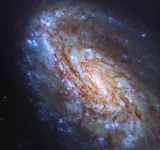
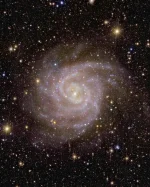
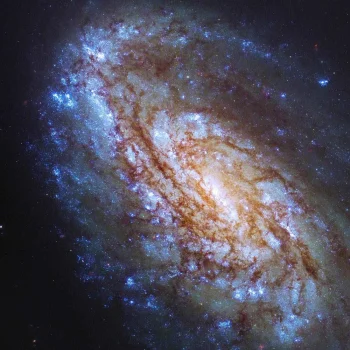
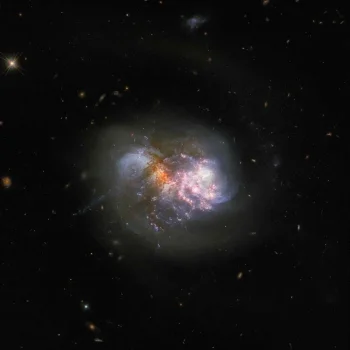
A massive, tilted spiral galaxy with a bright orange core fills the image, surrounded by large spiral arms glowing with bright blue stars and laced through with dark brown dust.⁣

nasa-20231002-0001.webp
 
John Steed Contributor
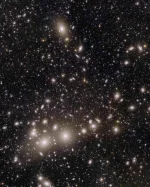
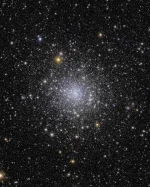
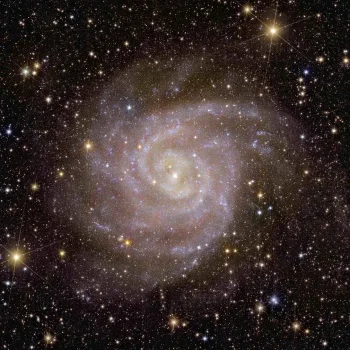
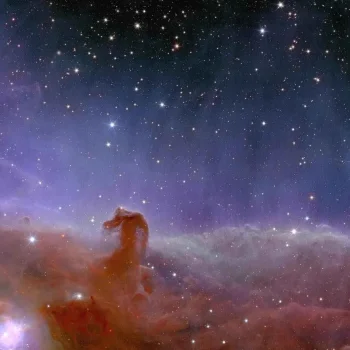
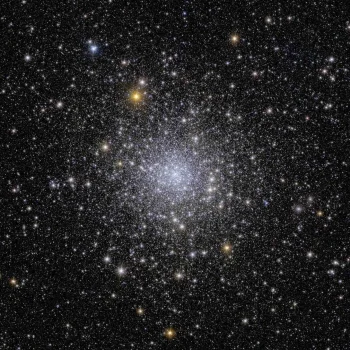
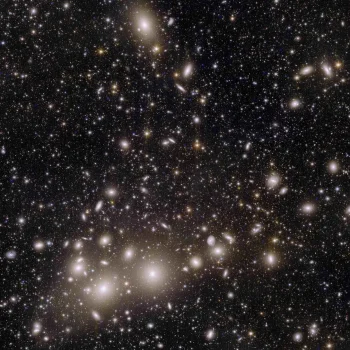
Stunning new images of the cosmos captured by the European space telescope Euclid.
 

Attachments

  • euclid-0004.webp
    euclid-0004.webp
    564.8 KB · Views: 0
  • euclid-0005.webp
    euclid-0005.webp
    765.6 KB · Views: 0
  • euclid-0002.webp
    euclid-0002.webp
    263.4 KB · Views: 0
  • euclid-0003.webp
    euclid-0003.webp
    610.6 KB · Views: 0
John Steed Contributor
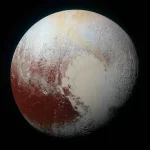
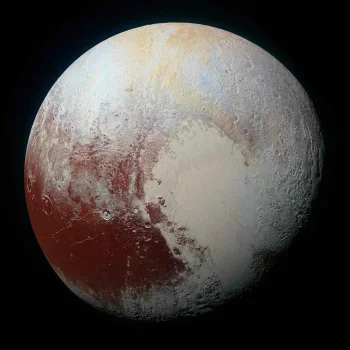
The first spacecraft to study Pluto up close – New Horizons – captured this image in blue, red, and infrared colors to help scientists distinguish Pluto's complex geological and climatological story. New Horizons launched in 2006 and arrived in Pluto's system in 2015, capturing images of Pluto and its moons before heading out further into the Kuiper Belt to study our solar system's beginning.⁣

Evidence from New Horizons suggests that Pluto's surface, marked with craters, mountains, plains, and valleys, is being reshaped due to tectonic forces. Mountains on Pluto can reach as high as 6,500 to 9,800 ft (2-3 km), made of water ice and a thin sheen of frozen gasses. ⁣

nasa-20231122-0001.webp

Image description: Craters and cracks etch the surface of Pluto which appears in deep red, white, tan, light blue, and orange. Black space surrounds the dwarf planet.⁣

#Pluto #NASA #Space #SolarSystem #NewHorizons
 
John Steed Contributor
Last edited:
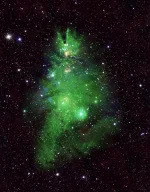
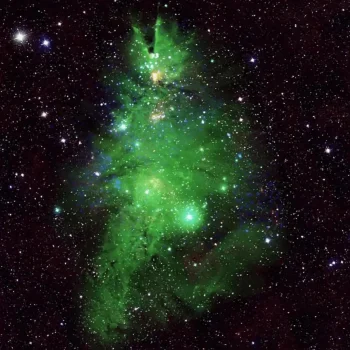
NASA has released a new image of a star cluster in the Milky Way and it looks very festive

The cluster of young stars has a very boring official name of NGC 2264, however, it's also known colloquially as the Christmas Tree Cluster.⁠
 

Attachments

  • nasa_xmas_tree.webp
    nasa_xmas_tree.webp
    226.4 KB · Views: 0
Legion Collaborator
Cosmic Coquette

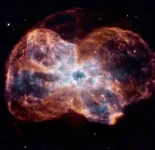
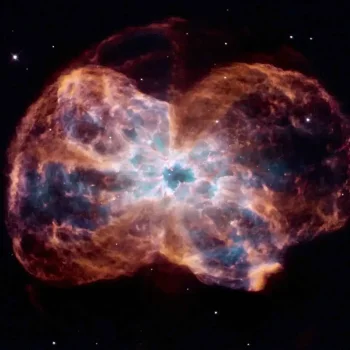
A bow-tie shaped nebula in pink-range colors against the blackness of space. The center glows in lighter shades including details in blue. Tendrils of gas and dust glow in shades of gold expanding out creating the unique shape. ⁣
 

Attachments

  • cosmiccoquette.webp
    cosmiccoquette.webp
    50.5 KB · Views: 0
John Steed Contributor
Saturn and Jupiter at 3000mm Zoom (Nikon P1000 / 4K)

 
Bandit Collaborator
The James Webb Space Telescope has found signs of potential light sources on a planet 47 light years away.

The JWST's website announced the possible sighting of 'aurorae' on a 'brown dwarf' named 'Brown Dwarf W1935', which is larger than Jupiter but smaller than the Sun. This cold entity lacks a host star, leaving its upper atmosphere without a clear energy source.

Methane emissions are believed to cause its aurorae, similar to Earth's Northern Lights, which occur when energetic particles from the Sun interact with our magnetic field. Since Brown Dwarf W1935 lacks a star, its version of the Northern Lights remains a mystery.
 
John Steed Contributor
Comet C/2024 G3 (ATLAS) is a long-period, sungrazing comet with an orbital period of approximately 135,000 years.

It is expected to reach perihelion, its closest approach to the Sun, on January 13, 2025, at a distance of 0.093 AU. The comet is anticipated to become the brightest of 2025, potentially exceeding an apparent magnitude of -3.5.

It will be visible primarily from the Southern Hemisphere before and after perihelion, while observers in the Northern Hemisphere may only be able to observe it during the daytime around perihelion.
 
Back
Top Bottom