





Thread Insights AI
4/10

The post lacks detail and context, merely directing users to an external article without contributing additional insights. It could benefit from a clearer purpose and more original content to enhance its value.

David76 Rising Star
Some important updates regarding the Nintendo Switch 2's battery indicator issue that some of you might have encountered. It seems that the battery percentage displayed isn't always accurate, which has led to some criticism about the console's battery life. However, Nintendo has stepped in with a solution to rectify this problem.

According to Nintendo, if your battery indicator isn't reflecting the actual charge, there's a straightforward fix that involves accessing the console's Recovery Mode. Here's what you need to do:

1. Use the Right Charger: Make sure you're using a powerful enough AC adapter. The original Switch adapter works for charging directly, but it may not suffice when the Switch 2 is docked.

2. Update Your System: Ensure your console has the latest system update installed.

3. Power Off Your Console: Turn off your Switch 2 completely.

4. Enter Recovery Mode: Press and hold the volume up (+) and volume down (-) buttons, then press the POWER button once to turn it on. Keep holding the volume buttons until the Recovery Mode menu appears.

5. Reset the Battery Meter: From the Recovery Mode menu, navigate to reset the battery level meter.

6. Reboot Your Console: Turn off the console again by holding down the POWER button, then turn it back on.

If the problem persists after trying these steps multiple times, unfortunately, you may need to send your console in for service.

As one user on X reported, they saw their battery percentage jump from 85% to 91% after following these steps, so it's definitely worth checking if you're experiencing a discrepancy.
 
Scottish Batman Apprentice
A recent hardware review by Digital Foundry on the Nintendo Switch 2 has shed light on both the advancements and shortcomings of this highly anticipated console. As Nintendo steps into a new generation of gaming, the Switch 2 aims to enhance the hybrid gaming experience, allowing seamless transitions between TV and handheld play. However, the review raises concerns regarding the quality of the LCD screen and the implementation of features like HDR and VRR.

Key Hardware Insights:
  • The Switch 2 is powered by a custom Nvidia processor, featuring eight ARM Cortex A78C CPU cores, which marks a significant performance leap compared to its predecessor.
  • The GPU utilises Nvidia's Ampere architecture with 1,536 CUDA cores, supporting advanced graphics capabilities.
  • Performance in handheld mode is surprisingly efficient, with low power consumption and decent battery life, managing to run demanding titles like Cyberpunk 2077 at under 10W.
Display and Visual Quality:
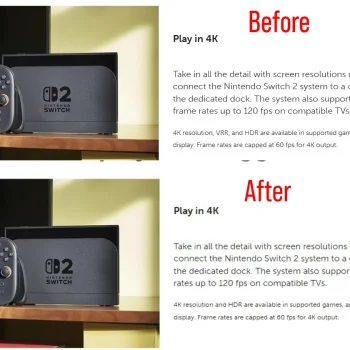
Despite these improvements, the display is where the Switch 2 falters. The LCD screen, while larger and brighter than the original, fails to deliver an adequate HDR experience and exhibits motion blurring that can detract from gameplay. The review points out that the display lacks the necessary contrast and brightness to truly capitalise on HDR capabilities.

Variable Refresh Rate (VRR) Concerns:
The console's VRR functionality appears to be inconsistent, with issues arising during gameplay in titles like Cyberpunk 2077. While the Switch 2 theoretically supports variable refresh rates, practical performance does not align with expectations, leading to noticeable judder during play.

Connectivity Enhancements:
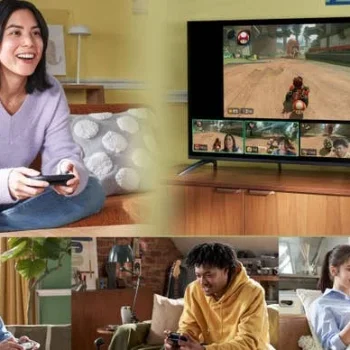
On a positive note, the console shows significant improvements in WiFi performance, and the inclusion of an Ethernet port in the dock is a welcome addition. The Game Share feature, which allows players to share gameplay experiences, has potential but needs refinement, especially under high-motion scenarios.

Final Thoughts:
Overall, while the Nintendo Switch 2 presents an exciting step forward for the brand, the hardware review highlights critical areas that need attention. The foundation is solid, but there are clear shortcomings, particularly with the display and certain promised features like HDR and VRR. As Nintendo continues to develop this platform, it will be interesting to see how these issues are addressed in future updates.

Summary:
  • Switch 2 boasts significant hardware improvements but has display issues.
  • Efficient power consumption in handheld mode.
  • VRR functionality shows inconsistencies in performance.
  • Improved WiFi and Ethernet capabilities.
  • Game Share feature needs further refinement.
 
David76 Rising Star
I read that review too, Scottish Batman Scottish Batman.

While the overall feedback is positive, particularly regarding hardware efficiency and load times, there are notable issues with display technologies like Variable Refresh Rate (VRR) and High Dynamic Range (HDR). These technologies, which are expected to enhance the gaming experience, are reportedly not performing adequately, particularly in handheld mode, where the experience can be described as "blurry."

The key points from the review include:

Strengths:
  • Improved hardware performance and efficiency
  • Fast loading times
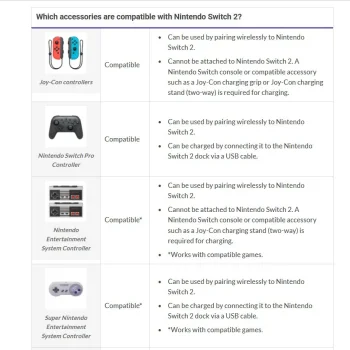
  • Solid compatibility with existing games
Concerns:
  • Display issues with VRR and HDR
  • Blurry visuals when handheld
  • Need for further improvements to the display technology
Has anyone bought a Switch 2 yet?
 
David76 Rising Star
In the recent Nintendo Switch 2 reveal, a collection of stunning 4K media highlights the first-party content set to define this new console. The video shared presents an engaging overview, showcasing the high-quality graphics and gameplay that fans can anticipate.


The media, encoded in h.264 and available in a hefty ZIP file, indicates Nintendo's commitment to delivering top-notch visuals at 3840x2160 resolution and 59.94 fps. This move signals a significant leap in performance and aesthetics for Nintendo, potentially drawing in both loyal fans and new players alike.

While the video is a tantalising showcase, it's crucial to note that the actual content of the Direct is separate from the additional media files. For those eager to get a deeper understanding of what Nintendo has in store, becoming a supporter may be essential to access all the perks.

In summary, the Switch 2 is poised to make waves in the gaming landscape, with an emphasis on first-party titles that leverage advanced graphical capabilities. As we await more details, here are some key takeaways:
  • The Switch 2 reveals features impressive 4K media showcasing first-party titles.
  • High-quality graphics at 3840x2160 resolution and 59.94 fps highlight Nintendo's advancements.
  • The video serves as a peek into the console's capabilities, distinct from the Direct content.
  • Supporters may gain exclusive access to additional media and insights.
Here's a recap of all the game reveals from the July Nintendo Direct

 
Tom Rising Star

Tom

The recent update to the Switch 2 introduces a feature that allows users to play Switch 1 games in full resolution while in handheld mode. This update, known as "Handheld Mode Boost," enables the Switch 2 to run compatible older titles as if they were in TV mode, effectively enhancing the gaming experience on the go.

Previously, Switch 1 games would downgrade to lower resolutions when played handheld on the Switch 2, despite the console's capability to handle higher performance settings. With the new update (version 22.0.0), players can now enjoy improved resolutions, making for a more visually appealing experience, especially for graphically intensive games.

While this upgrade may not transform every game into a high-fidelity experience, it is a significant step for those who want to enjoy their existing library without additional costs. Players will need to activate the feature manually, ensuring they are running the latest software version.

To play your compatible Switch 1 games in their full resolution, you'll need to manually activate this feature. First, make sure your Switch 2 is running version 22.0.0 or newer. You can check from Settings > System > System Update. Next, under Settings > System, choose "Nintendo Switch Software Handling." Now, tap the toggle next to "Handheld Mode Boost."
 
Back
Top Bottom