









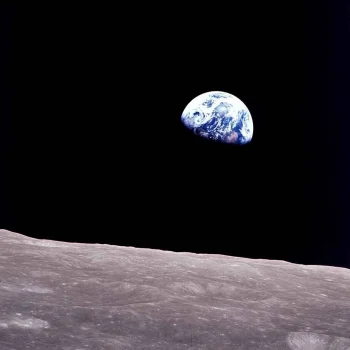
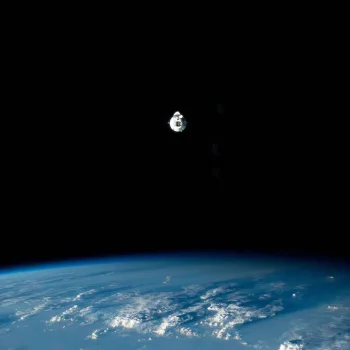





After a couple of delays earlier this year, NASA's Space Launch System finally launched the Artemis II mission, sending four seasoned astronauts on a 10-day journey around the Moon.
Meet the Crew
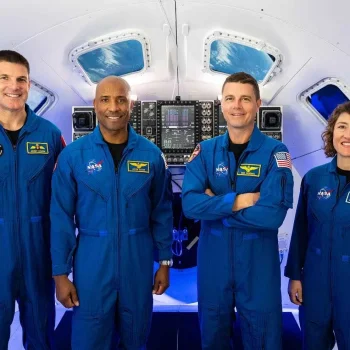
This mission is led by Commander Reid Wiseman, a US Navy Captain with a remarkable 165 days of experience in space. He's joined by Pilot Victor Glover, who also served in the Navy and made history as the first person of colour to venture beyond low Earth orbit during the SpaceX Crew-1 mission.
Then we have Christina Koch, the Mission Specialist known for holding the record for the longest single spaceflight by a woman—328 days, no less! She'll be making history again as the first woman to fly near the Moon. Rounding out the team is Jeremy Hansen, a Colonel in the Royal Canadian Air Force, marking the first time a non-American has left Earth's orbit to travel towards the Moon. Quite the diverse and capable team!
The Mission Details
As of now, NASA is nearly through the launch sequence, with just a couple of steps left to complete. The next phases include the Apogee Raise Burn and Orion Separation, all of which should be wrapped up within a few hours after liftoff. Once in orbit, the astronauts will spend the first 24 hours testing life-support systems and conducting some proximity operations. If all goes well, they'll perform a Trans-Lunar Injection burn and begin their four-day trip to the Moon.
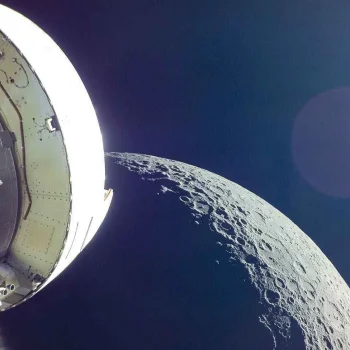
When they reach the Moon, it's all about the flyby - no landing or orbiting this time. They'll be soaring about 4,700 miles past the Moon's far side, which could make this the furthest humanity has ventured into deep space so far. After the flyby, it's a four-day return to Earth, culminating in a high-speed reentry and splashdown in the Pacific Ocean.
If all goes according to plan, we should see them back around April 10.
Meet the Crew
This mission is led by Commander Reid Wiseman, a US Navy Captain with a remarkable 165 days of experience in space. He's joined by Pilot Victor Glover, who also served in the Navy and made history as the first person of colour to venture beyond low Earth orbit during the SpaceX Crew-1 mission.
Then we have Christina Koch, the Mission Specialist known for holding the record for the longest single spaceflight by a woman—328 days, no less! She'll be making history again as the first woman to fly near the Moon. Rounding out the team is Jeremy Hansen, a Colonel in the Royal Canadian Air Force, marking the first time a non-American has left Earth's orbit to travel towards the Moon. Quite the diverse and capable team!
The Mission Details
As of now, NASA is nearly through the launch sequence, with just a couple of steps left to complete. The next phases include the Apogee Raise Burn and Orion Separation, all of which should be wrapped up within a few hours after liftoff. Once in orbit, the astronauts will spend the first 24 hours testing life-support systems and conducting some proximity operations. If all goes well, they'll perform a Trans-Lunar Injection burn and begin their four-day trip to the Moon.
When they reach the Moon, it's all about the flyby - no landing or orbiting this time. They'll be soaring about 4,700 miles past the Moon's far side, which could make this the furthest humanity has ventured into deep space so far. After the flyby, it's a four-day return to Earth, culminating in a high-speed reentry and splashdown in the Pacific Ocean.
If all goes according to plan, we should see them back around April 10.